
Long panels
For a cabinet side or door, compare the longest bend with the working length. Check the distance between columns when a return flange must pass inside the frame.
CNC press brakes · WADH series
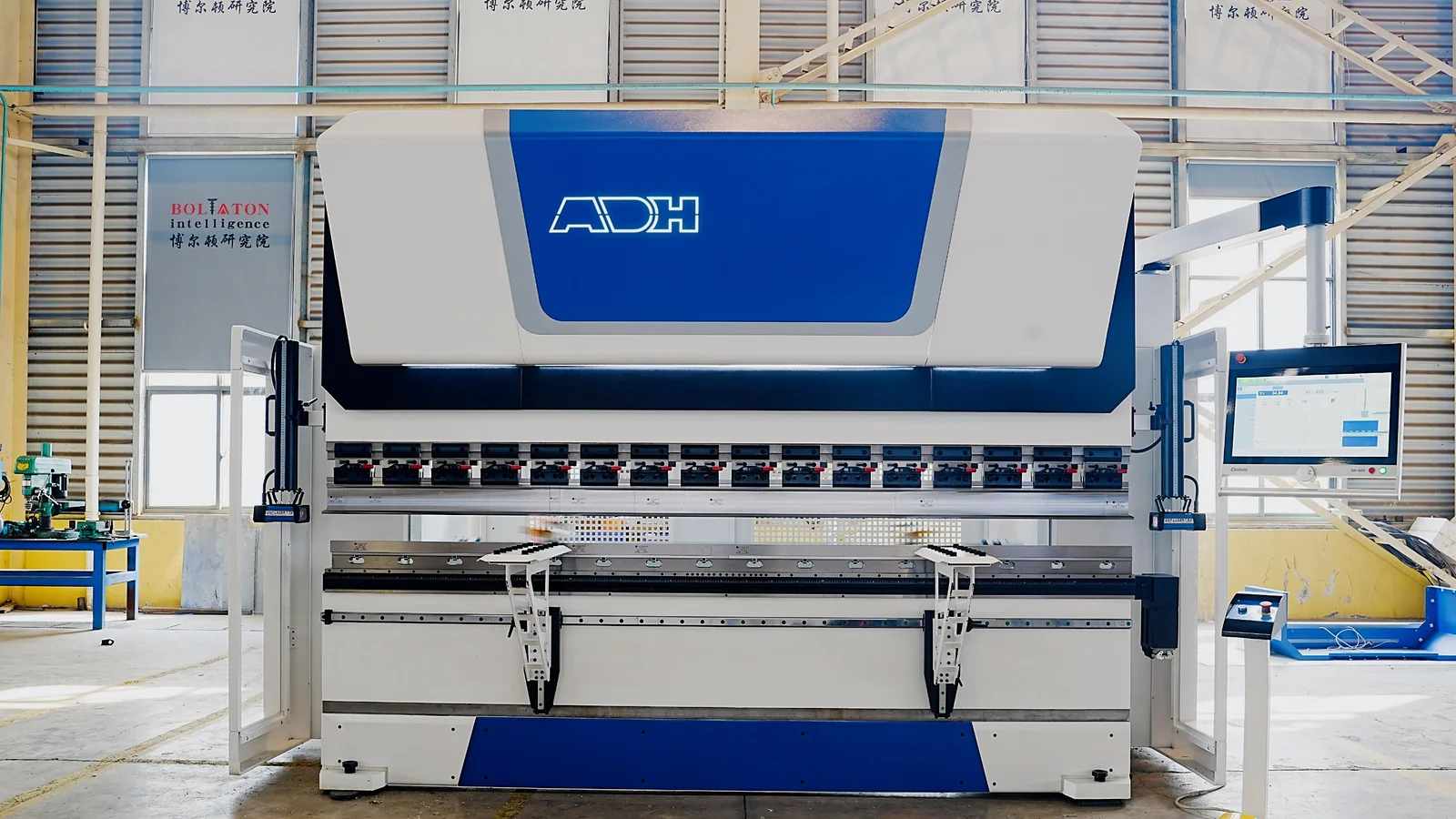
Twin servo pumps drive the hydraulic ram. Compare 19 WADH models from 70 to 300 tonnes by bend length, speed and tool clearance.
Technical specifications
Select a model to compare bend force, usable length, ram travel and installation dimensions. Approach and return speeds describe unloaded travel. Working speed applies during bending.
| Model | Bending Force | Working Length | Approach Speed | Working Speed | Return Speed | X Stroke | X Speed | R Stroke | R Speed | Column Distance | Throat Depth | Ram Stroke | Open Height | Main Motor | Pump Displacement | Weight | Overall Dimensions |
|---|---|---|---|---|---|---|---|---|---|---|---|---|---|---|---|---|---|
| Unit | kN | mm | mm/s | mm/s | mm/s | mm | mm/s | mm | mm/s | mm | mm | mm | mm | kW | cm³/rev | t | L×W×H mm |
| WADH-70T/2500 | 700 | 2500 | 300 | 25 | 250 | 500 | 350 | 200 | 200 | 2050 | 300 | 150 | 460 | 2×3.8 | 2×8 | 5 | 3100×1600×2400 |
| WADH-110T/3200 | 1100 | 3200 | 280 | 23 | 260 | 500 | 350 | 200 | 200 | 2700 | 400 | 200 | 480 | 2×3.8 | 2×10 | 7.4 | 3800×1800×2750 |
| WADH-110T/4100 | 1100 | 4100 | 280 | 23 | 300 | 500 | 350 | 200 | 200 | 3600 | 400 | 200 | 480 | 2×3.8 | 2×10 | 8.9 | 4700×1800×2750 |
| WADH-135T/3200 | 1350 | 3200 | 270 | 20 | 250 | 500 | 350 | 200 | 200 | 2700 | 400 | 200 | 480 | 2×5 | 2×13 | 8.5 | 3800×1800×2750 |
| WADH-135T/4100 | 1350 | 4100 | 270 | 20 | 250 | 500 | 350 | 200 | 200 | 3600 | 400 | 200 | 480 | 2×5 | 2×13 | 9.9 | 4700×1800×2750 |
| WADH-170T/3200 | 1700 | 3200 | 250 | 20 | 250 | 500 | 350 | 200 | 200 | 2700 | 450 | 200 | 480 | 2×7.3 | 2×16 | 10.6 | 3800×2000×3100 |
| WADH-170T/4100 | 1700 | 4100 | 250 | 20 | 250 | 500 | 350 | 200 | 200 | 3600 | 450 | 200 | 480 | 2×7.3 | 2×16 | 12.2 | 4700×2000×3100 |
| WADH-220T/3200 | 2200 | 3200 | 200 | 20 | 200 | 500 | 350 | 200 | 200 | 2600 | 450 | 200 | 480 | 2×7.3 | 2×16 | 12.1 | 3800×2100×2960 |
| WADH-220T/4100 | 2200 | 4100 | 200 | 20 | 200 | 500 | 350 | 200 | 200 | 3600 | 450 | 200 | 480 | 2×7.3 | 2×16 | 14.0 | 4700×2100×3050 |
| WADH-220T/5000 | 2200 | 5000 | 200 | 20 | 200 | 500 | 350 | 200 | 200 | 4000 | 450 | 200 | 480 | 2×7.3 | 2×16 | 16.3 | 5600×2100×3120 |
| WADH-220T/6000 | 2200 | 6000 | 200 | 20 | 200 | 500 | 350 | 200 | 200 | 4800 | 450 | 200 | 480 | 2×7.3 | 2×16 | 20.1 | 6700×2100×3220 |
| WADH-250T/3200 | 2500 | 3200 | 200 | 15 | 200 | 500 | 350 | 200 | 200 | 2600 | 450 | 250 | 540 | 2×9 | 2×20 | 15.3 | 3800×2200×3120 |
| WADH-250T/4000 | 2500 | 4000 | 200 | 15 | 200 | 500 | 350 | 200 | 200 | 3100 | 450 | 250 | 540 | 2×9 | 2×20 | 16.8 | 4600×2200×3150 |
| WADH-250T/5000 | 2500 | 5000 | 200 | 15 | 200 | 500 | 350 | 200 | 200 | 3800 | 450 | 250 | 540 | 2×9 | 2×20 | 20.7 | 5600×2200×3450 |
| WADH-250T/6000 | 2500 | 6000 | 200 | 15 | 200 | 500 | 350 | 200 | 200 | 4800 | 450 | 250 | 540 | 2×9 | 2×20 | 25.2 | 6600×2200×3650 |
| WADH-300T/3200 | 3000 | 3200 | 150 | 12 | 150 | 500 | 350 | 200 | 200 | 2600 | 500 | 250 | 570 | 2×15 | 2×25 | 18.2 | 3200×2220×3158 |
| WADH-300T/4000 | 3000 | 4000 | 150 | 12 | 150 | 500 | 350 | 200 | 200 | 3100 | 500 | 250 | 570 | 2×15 | 2×25 | 20.1 | 4300×2500×3410 |
| WADH-300T/5000 | 3000 | 5000 | 150 | 12 | 150 | 500 | 350 | 200 | 200 | 3800 | 500 | 250 | 570 | 2×15 | 2×25 | 26.5 | 5300×2500×3400 |
| WADH-300T/6000 | 3000 | 6000 | 150 | 12 | 150 | 500 | 350 | 200 | 200 | 4800 | 500 | 250 | 570 | 2×15 | 2×25 | 29.8 | 6300×2500×3420 |
Applications
Two parts of the same length can need different tools, force and clearance. Start with the bend that places the greatest demand on the machine.
For a cabinet side or door, compare the longest bend with the working length. Check the distance between columns when a return flange must pass inside the frame.
Check the finished channel against open height, ram stroke and punch height. Allow room to rotate the part between bends and to remove it after the last flange.
For brackets that return to production regularly, save the bend sequence and gauge positions. Trial the first part with the production material and die opening.
For work with long pauses between batches, compare the pumps over a full shift. Record approach, forming, return and idle time using the same part and tools.
Machine in operation
See the 110-tonne, 3,200 mm WADH equipped with a DA66S controller. The model selector above lists its travel, working speed and drive package.
Watch on YouTube (opens in a new tab)Product systems
The drive moves the ram, the gauge locates the blank and the CNC coordinates both through the bend sequence.
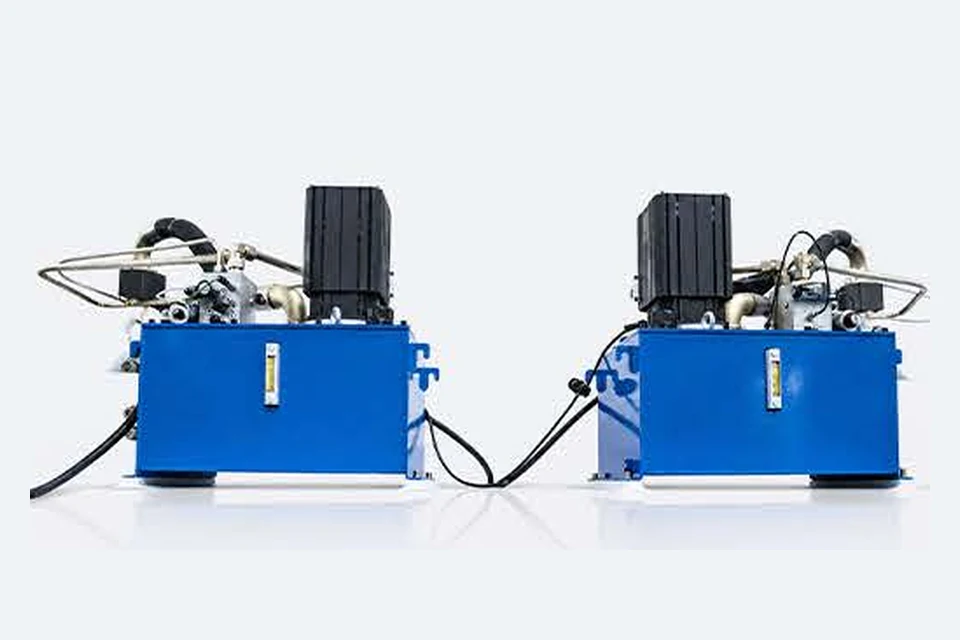
Each servo motor drives a hydraulic pump. Closed-loop synchronization coordinates the two ends of the ram as it approaches the sheet, forms the bend and returns. Pump output follows the demand of each phase.
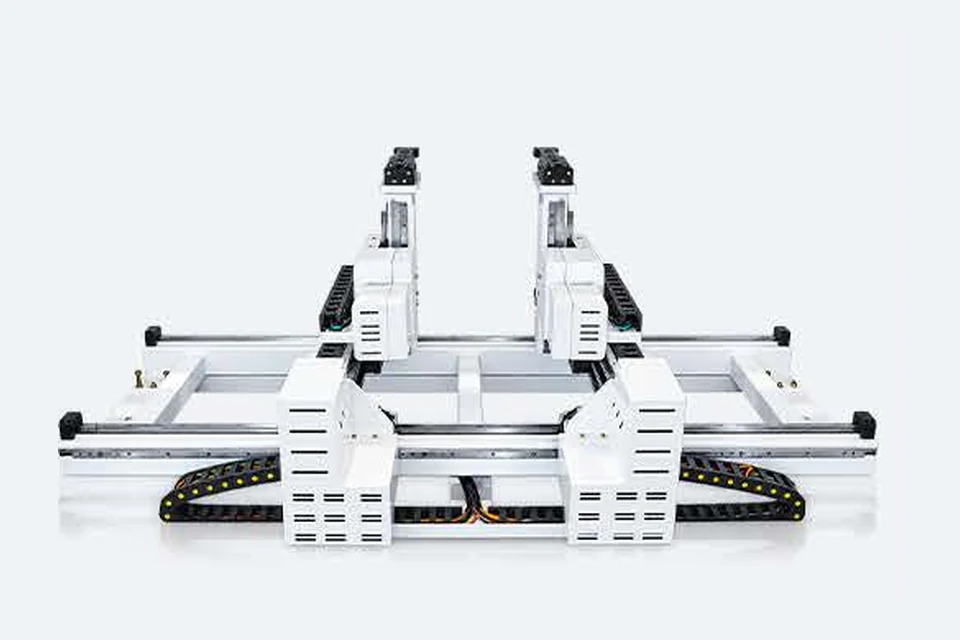
The fingers give the blank a physical reference for flange depth. On a part with several bends, the CNC moves the gauge to the next position. Short flanges and a part that has already been bent need enough clearance to reach the fingers.
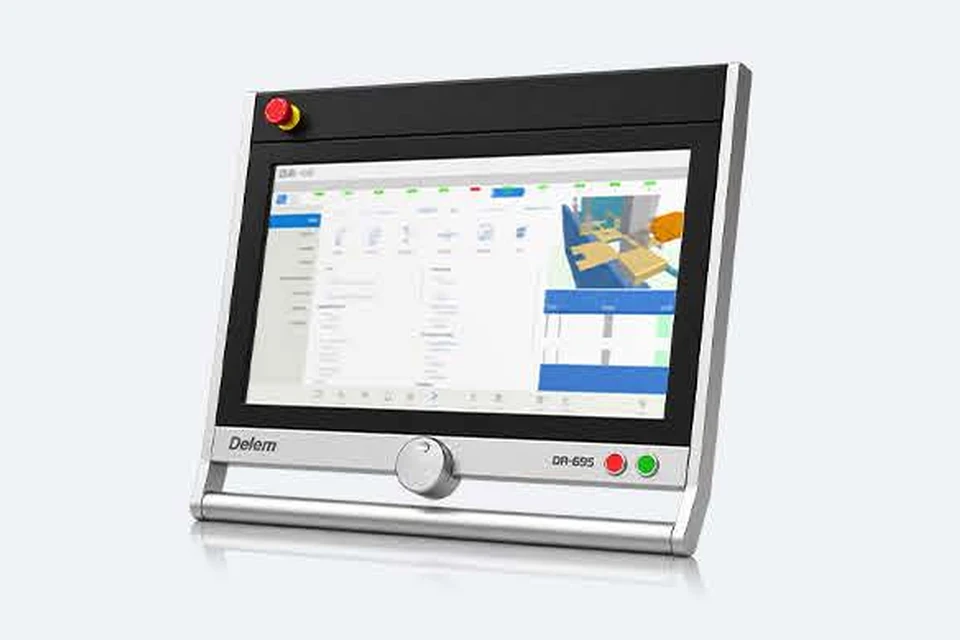
The touchscreen brings the bend sequence and machine positions into one program. Graphical 2D or 3D functions depend on the controller package. Tool profiles, die openings and material data determine whether the simulated sequence is usable on the machine.
Configuration
Size the machine for the material, thickness, die opening and longest bend. Then check column spacing and the installed tool height.
Select the controller and programming functions, gauge arrangement, punches and dies around the part family and changeover frequency.
Use the selected model’s footprint and weight for layout. Agree lifting access, safeguarding and a sample bend with the required angle and flange tolerance.
Through the machine lifecycle
Find the training, maintenance guidance and parts support your team needs. Services and availability are confirmed for your machine and location.
Before start-up
Prepare utilities, lifting and the installation area, then coordinate start-up and handover.
Review installation supportBefore production
Build the operator, programming and maintenance skills required for your delivered machine.
Explore trainingIn operation
Get support with the machine model, serial number and a clear description of the issue.
Request technical supportPlanned spares
Identify your machine and component so our team can check compatibility and availability.
Request service or partsSelf-service
Find video guidance for operating and maintaining your ADH machine. Check relevance to your model and configuration.
Browse support videosContract scope
Your quotation or contract defines included services, warranty, exclusions and responsibilities.
Review service scopeProject enquiry
Tell us what you want to make or improve. Technical details and drawings can follow.
Contact ADH
Name, email and a short description are enough to begin.